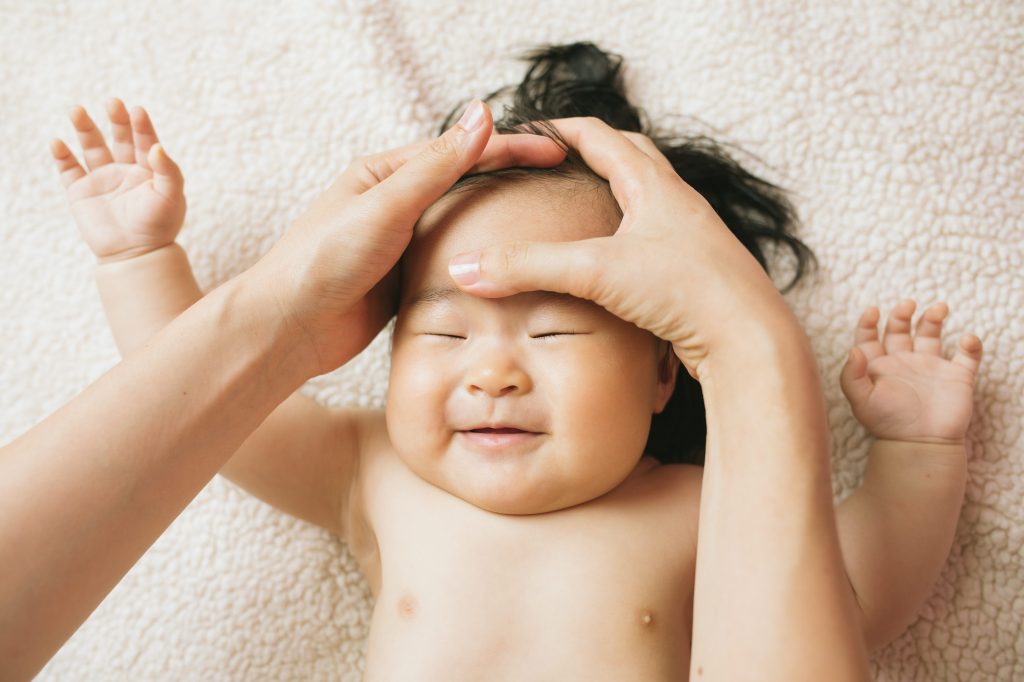
It you’ve ever looked at your newborn and felt an overwhelming urge to cuddle, squeeze, or smush their tiny cheeks – congratulations, you’re already halfway to baby massage. Touch is one of the earliest languages babies understand, and massage is a beautiful way to “talk” to then long before they understand words.
Why baby massage matters
For newborns, touch isn’t just comforting – it’s essential. Gentle, intentional massage van help your baby feel secure, connected, and calm. It also fives parents a simple, meaningful way to bond, especially during those early days when everything else feels new and slightly chaotic.
The benefits (for baby and you)
- Boosts bonding: skin to skin contact encourages oxytocin, the “love hormone,” helping both you and your baby feel closer and calmer.
- Supports relaxation and sleep: many babies become more settled after a massage, making it a lovely addition to your bedtime routine.
- May ease tummy troubles: gentle strokes of the belly van help with gas or constipation – an instant win for everyone.
- Stimulates development: massage supports body awareness, circulation, and sensory growth.
- Gives you confidence: it’s a hands-on way to learn your baby’s cues and build trust in your caregiving instincts.
How to get started
Baby massage doesn’t require fancy oils or special training – just your hands, a warm room, and a calm moment.
- Choose the right time: aim for a moment when your baby is awake, happy, and not too hungry or full.
- Create a cozy space: soft lighting and a warm blanket help set the tone.
- Use gentle, slow stokes: start with arms and legs, then move to the tummy and back. Follow your baby’s reaction – if they wiggle happily, you’re on the right track; If they fuss, take a break.
- Keep it short: for newborns, even 5-10 minutes is plenty.
A final note
Baby massage isn’t about perfections – it’s about connection. Even it you feel a little awkward at first, you baby won’t mind. What they feel most is your presence, your warmth, and your love.
Share your own experience at the parenting circle.
 The family compass